
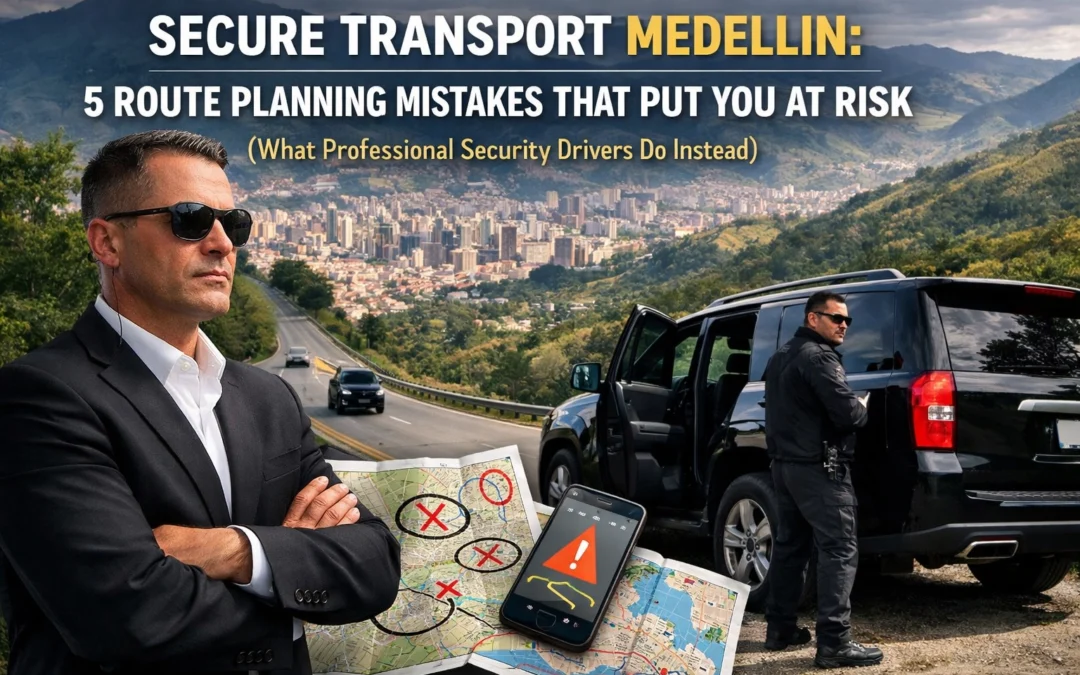
You could have the best armored vehicle in Medellín, a driver with 20 years of experience, and state-of-the-art GPS tracking. But if your route planning is wrong, none of that matters.
Most transport security failures don't happen because of faulty equipment or inexperienced drivers. They happen because someone took a shortcut, relied on outdated information, or followed the GPS without questioning it.
At 911 Medellin, we've analyzed hundreds of security incidents involving executive transport in Medellín. The pattern is clear: poor route planning creates predictable vulnerabilities that bad actors exploit.
Here are the five most common route planning mistakes we see: and what our professional security drivers do instead.
Mistake #1: Using the Same Route Every Single Day
The Risk: Predictability is the enemy of security. When you use the same route to your office, hotel, or meeting location every day, you're broadcasting your pattern. Anyone watching can set their watch by your movements.
Express kidnappers and robbery crews in Medellín specifically look for predictable patterns. They stake out locations, time your arrivals, and identify choke points where you're most vulnerable.
What Professional Security Drivers Do: Route variation is standard protocol. Our drivers at 911 Medellin maintain a rotation of at least 3-5 different routes for regular destinations, never using the same one twice in a row. We also vary departure times by 10-15 minutes when possible.
This isn't paranoia: it's basic operational security. Unpredictability makes you an unattractive target because it requires more surveillance resources and increases the risk of detection.
Mistake #2: Ignoring Real-Time Intelligence About Neighborhood Changes
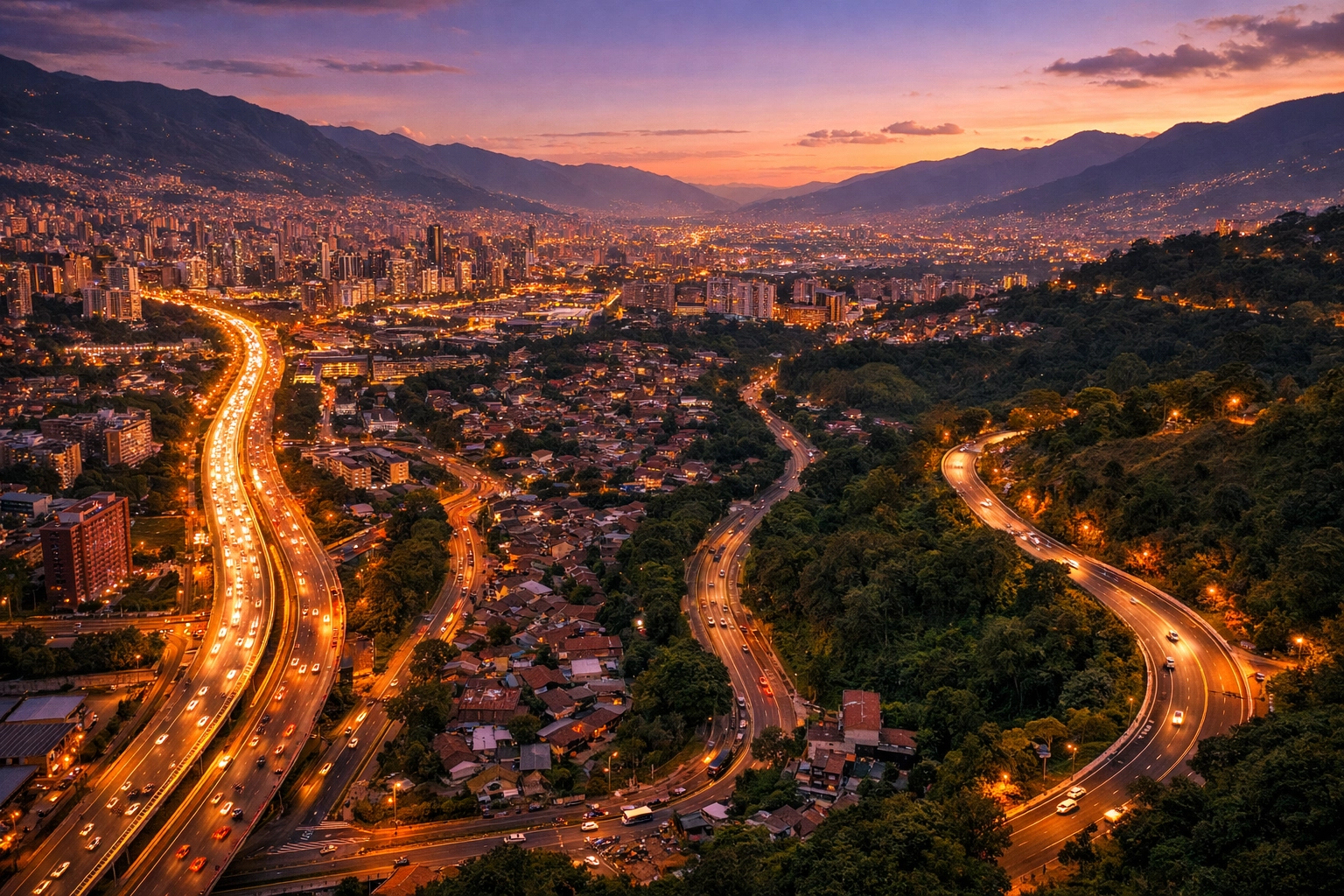
The Risk: Google Maps doesn't know that Comuna 13 is safe at 2 PM but problematic at 9 PM. It doesn't know that a specific intersection in Poblado just had three robberies this week. It can't tell you that protests shut down Avenida Oriental yesterday and might do it again today.
Relying solely on navigation apps means you're making decisions with incomplete information. That information gap can put you directly in harm's way.
What Professional Security Drivers Do: We maintain active intelligence networks. Our drivers receive daily briefings about security incidents, protest activity, road closures, and neighborhood status changes across Medellín.
Before every transport assignment, our team reviews:
- Incident reports from the past 48 hours
- Known protest or demonstration schedules
- Traffic patterns and construction updates
- Weather conditions affecting route safety
- Client-specific threat assessments
We also communicate constantly with other security professionals in the field who provide real-time updates about emerging situations.
Mistake #3: Taking the Fastest Route Instead of the Safest Route
The Risk: Your GPS defaults to the fastest route. That makes sense for pizza delivery: not for security transport.
The "fastest" route often takes you through neighborhoods with higher crime rates, poorly lit streets, or areas with limited escape options. Saving five minutes isn't worth driving through a known robbery hotspot or getting stuck in a narrow street with no alternate exit.
What Professional Security Drivers Do: Safety trumps speed, always. When planning routes, our drivers prioritize:
- Main arterial roads over shortcuts through residential areas
- Well-lit streets with active business districts
- Routes with multiple exit options at every turn
- Avoiding dead-ends and bottleneck intersections
- Staying on roads with consistent traffic flow (empty streets are surveillance opportunities)
A professional security driver would rather take an extra 10 minutes on a secure route than shave time off using a questionable shortcut. Your safety isn't negotiable.
Mistake #4: Not Pre-Running Critical Routes
The Risk: You've got an important meeting downtown at 9 AM. Your driver plugs in the address and off you go. But when you arrive, there's construction blocking the entrance. Or the parking situation is chaotic. Or you discover the building backs onto an alley with poor visibility.
Now you're problem-solving in real-time, sitting in a stationary vehicle: one of the most vulnerable positions in security transport.
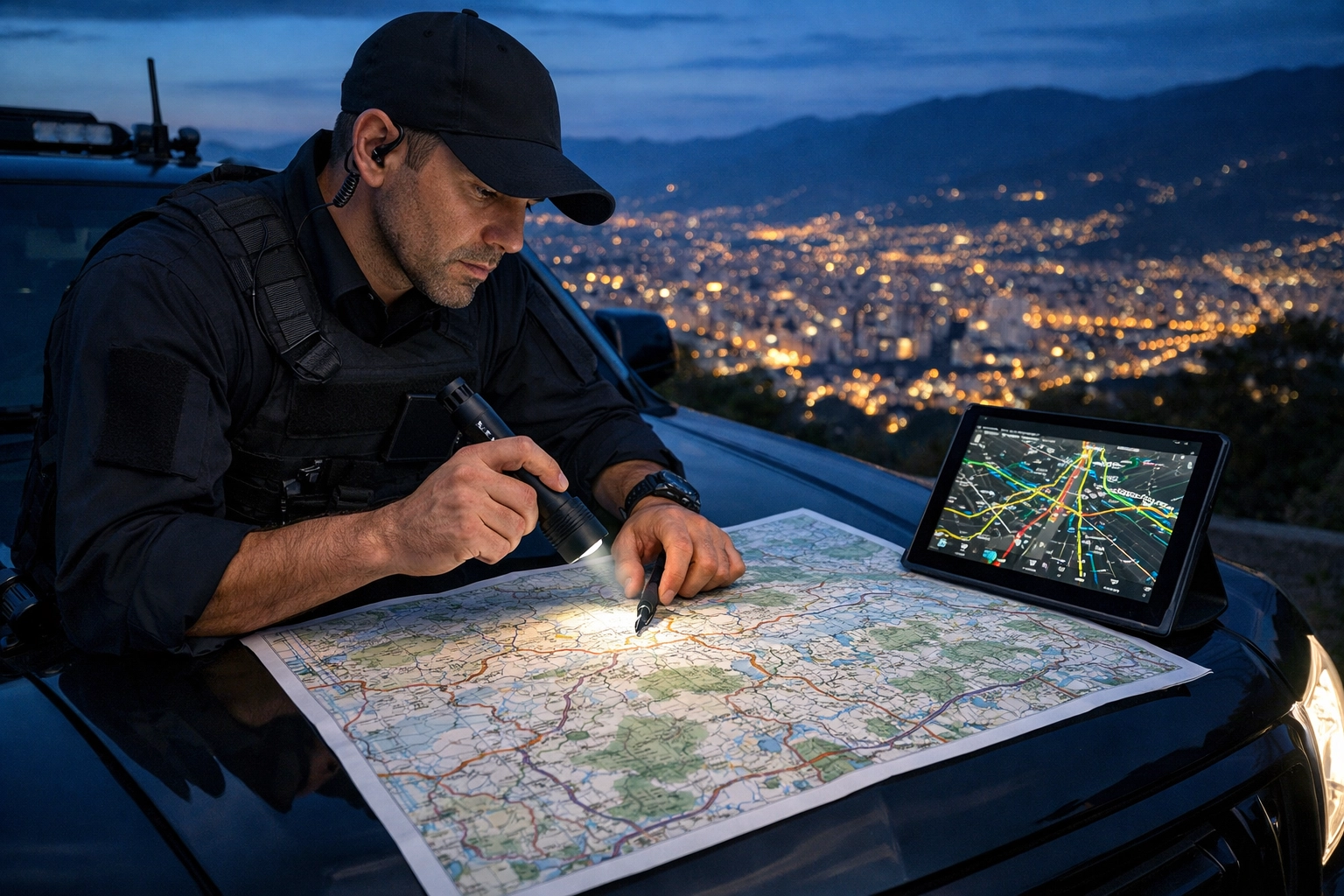
What Professional Security Drivers Do: For high-profile clients or critical destinations, we physically pre-run the route 24-48 hours in advance.
During a pre-run, our drivers evaluate:
- Actual traffic conditions at the expected transit time
- Entry and exit points at the destination
- Secure parking or drop-off locations
- Nearby hospitals and police stations
- Alternative routes if the primary becomes compromised
- Potential ambush points or surveillance positions
This reconnaissance eliminates surprises. When you're moving a VIP or handling sensitive business, surprises are threats. Pre-running routes means your driver has already solved problems before you encounter them.
Mistake #5: Failing to Build in Route Flexibility and Escape Options
The Risk: You're following your planned route when suddenly there's an accident ahead, or your driver notices the same motorcycle has been following you for the past three turns, or a protest spontaneously blocks the road.
If your route plan is rigid: just point A to point B with no contingencies: you've trapped yourself. You're forced to either push through a potentially dangerous situation or make panicked decisions under pressure.
What Professional Security Drivers Do: Every route we plan includes multiple contingency options. Before departure, our drivers identify:
- At least two alternative routes to every destination
- Safe havens along the route (police stations, hotels, secure parking areas)
- Rally points if vehicles in a convoy become separated
- Hospitals and medical facilities along each route option
- Quick U-turn locations for rapid direction changes
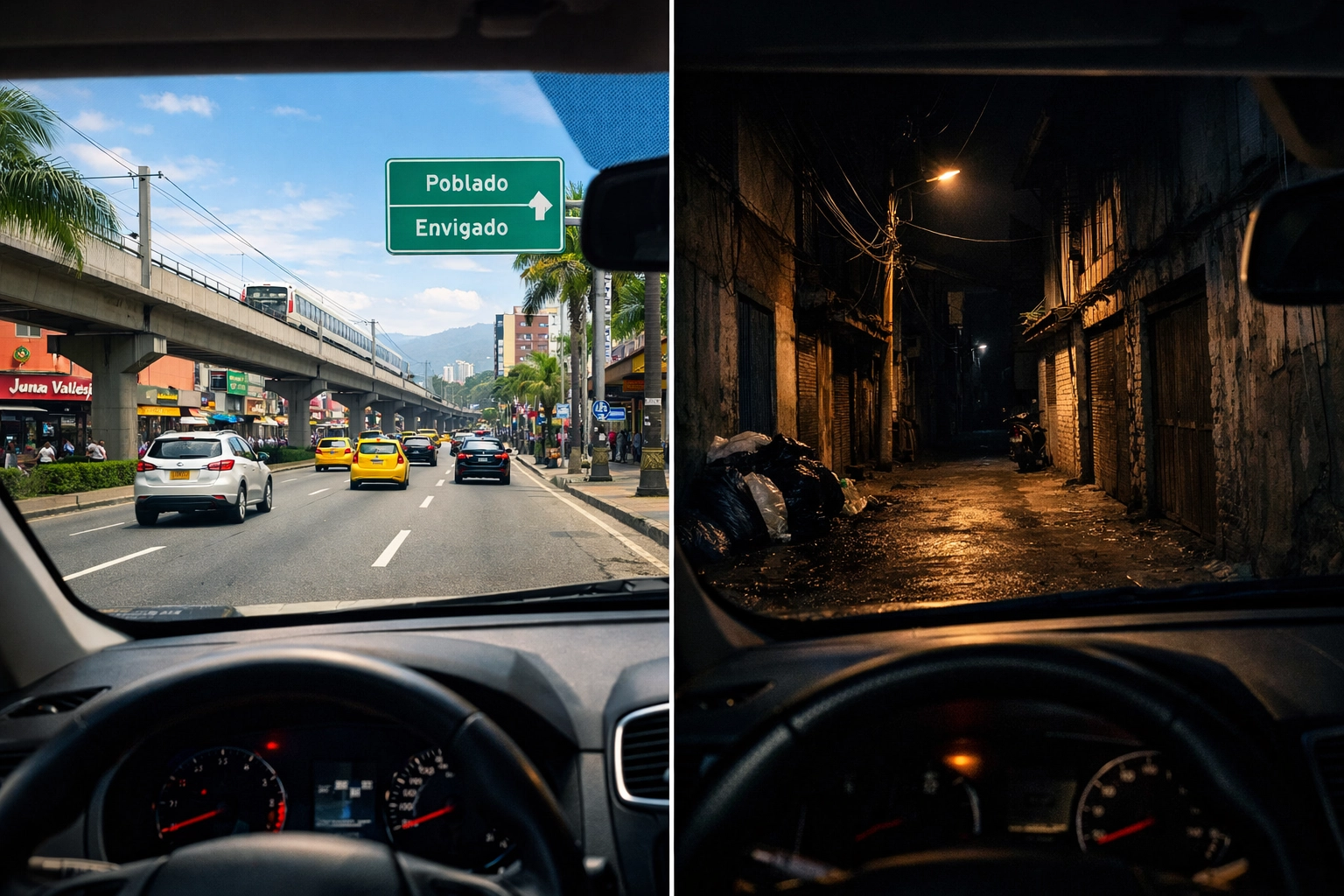
We also maintain what's called "situational awareness protocols." Our drivers constantly scan for surveillance indicators: vehicles following for multiple turns, pedestrians making eye contact and using phones, unusual clusters of people at intersections.
If a driver identifies a potential threat, they have pre-authorized procedures to deviate from the route, including immediately contacting our operations center for real-time support and guidance.
What This Means for Your Medellín Security Transport
Route planning isn't glamorous. It doesn't involve tactical gear or dramatic maneuvers. But it's the foundation of effective security transport.
The difference between amateur transport and professional security driving isn't just skill behind the wheel: it's the hours of preparation, intelligence gathering, and route analysis that happen before the vehicle ever starts moving.
At 911 Medellin, every transport assignment receives this level of planning, whether you're a C-suite executive, a family on vacation, or a business traveler attending meetings across the city. We've got your back from the moment you contact us until you reach your destination safely.
You can read more about our comprehensive approach to executive protection in Medellín and how 24/7 GPS monitoring works with our security protocols.
Your Safety Isn't Negotiable: Let's Talk
Don't leave your security transport to chance. Whether you need airport pickup, daily executive transport, or secure travel for your family, 911 Medellin provides professional security driving with military-grade route planning and real-time intelligence support.
Contact 911 Medellin Today:
📞 Phone: +57 321 695-0396
📧 Email: info@911medellin.com
🌐 Website: https://911medellin.com
What Our Clients Say:
"Best security team I ever worked with. Danny Tremblay and team were solid, knew the city, got me where I needed to go safely every time. No BS, just professional protection. Highly recommend if you want peace of mind in Medellín." : Danny Tremblay, Business Executive
We're available 24/7 for immediate consultations and emergency security transport needs. Your safety is our only mission: let's make sure your next trip through Medellín is secure from start to finish.