
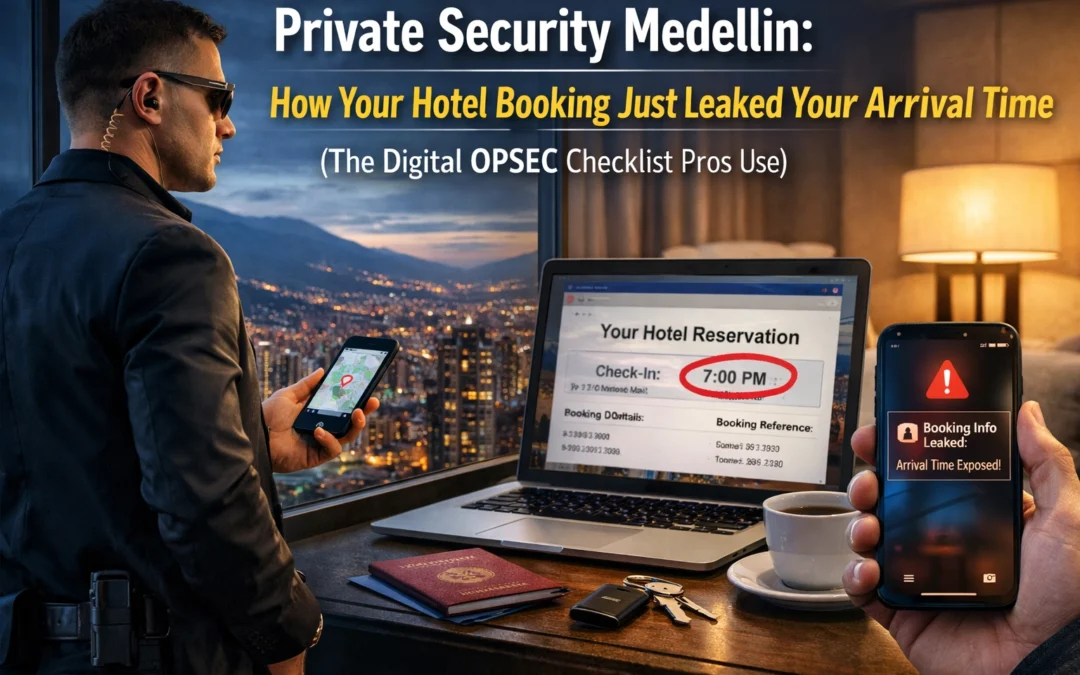
You just confirmed your Medellin hotel reservation. Flight details entered. Airport pickup requested. Arrival time: 7:45 PM.
Here's the problem: at least four people now know exactly when you're landing, where you're staying, and that you'll be carrying luggage through a high-traffic area.
That's not paranoia. That's operational security reality in 2026.
Most travelers think digital privacy is about credit card fraud or identity theft. But when you're visiting Medellin, especially if you're a business traveler, executive, or high-net-worth individual, your booking confirmations are creating a real-world security vulnerability.
Let's talk about what's actually leaking from your hotel reservation, and what the pros do to lock it down.
The Digital Trail You're Leaving (Whether You Know It or Not)
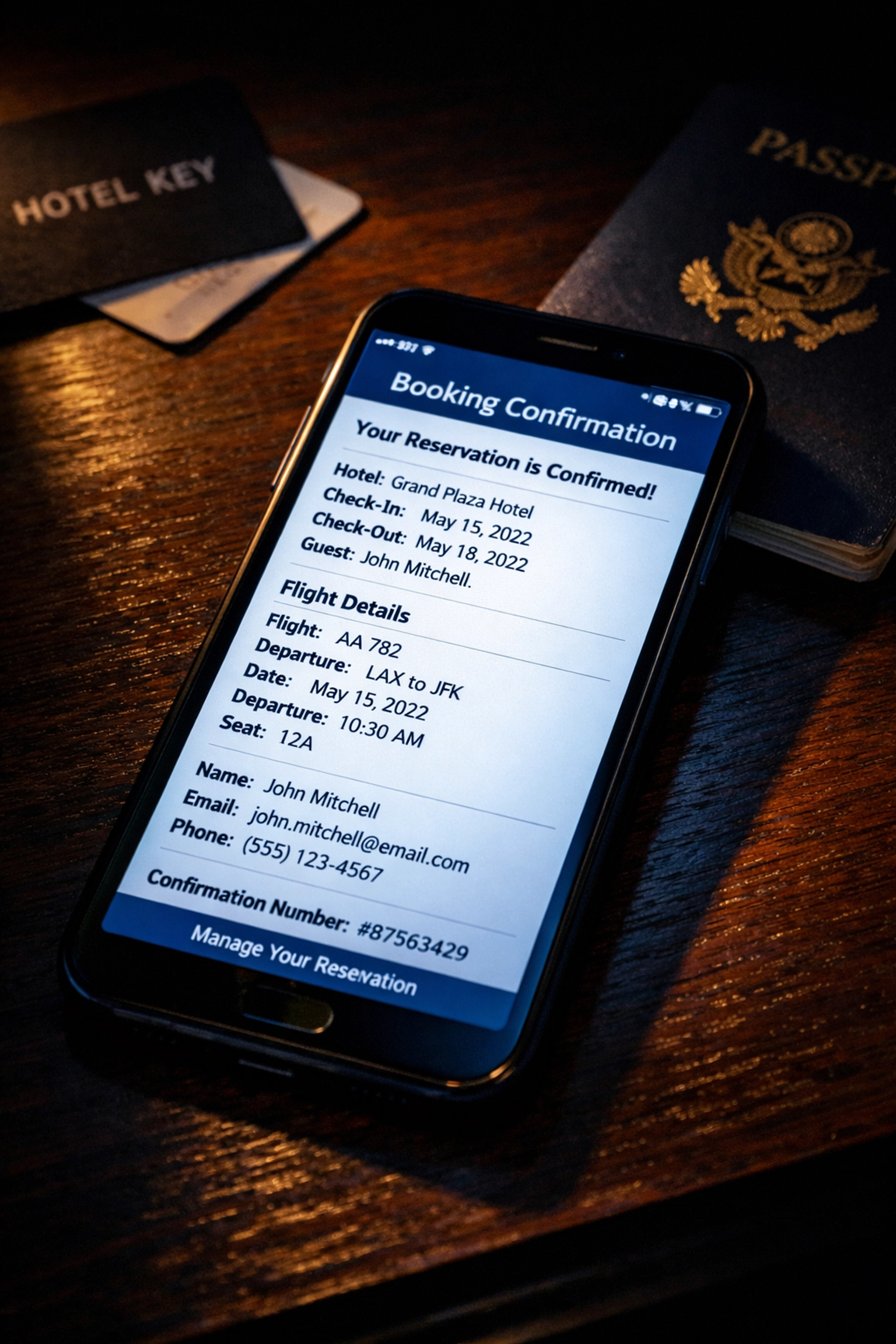
Your hotel confirmation email contains:
- Full name
- Arrival and departure dates
- Flight number (if you requested airport pickup)
- Room type and floor level
- Payment method and billing address
- Phone number and email
- Special requests (like "late arrival" or "VIP treatment")
That's a complete intelligence package.
Who has access to this information?
Front desk staff. Housekeeping managers. Concierge teams. Third-party booking platforms. The hotel's IT contractor. Email servers. Cloud backup systems.
In Medellin, where organized crime networks actively target foreign visitors, this data has street value. Romance scammers use dating apps to identify targets. Express kidnappers stake out hotel lobbies. Thieves monitor airport pickup zones.
Your confirmation email just told them exactly when and where to find you.
How Arrival Times Get Weaponized
Here's how it plays out in the real world:
Scenario 1: The Airport Pickup Leak
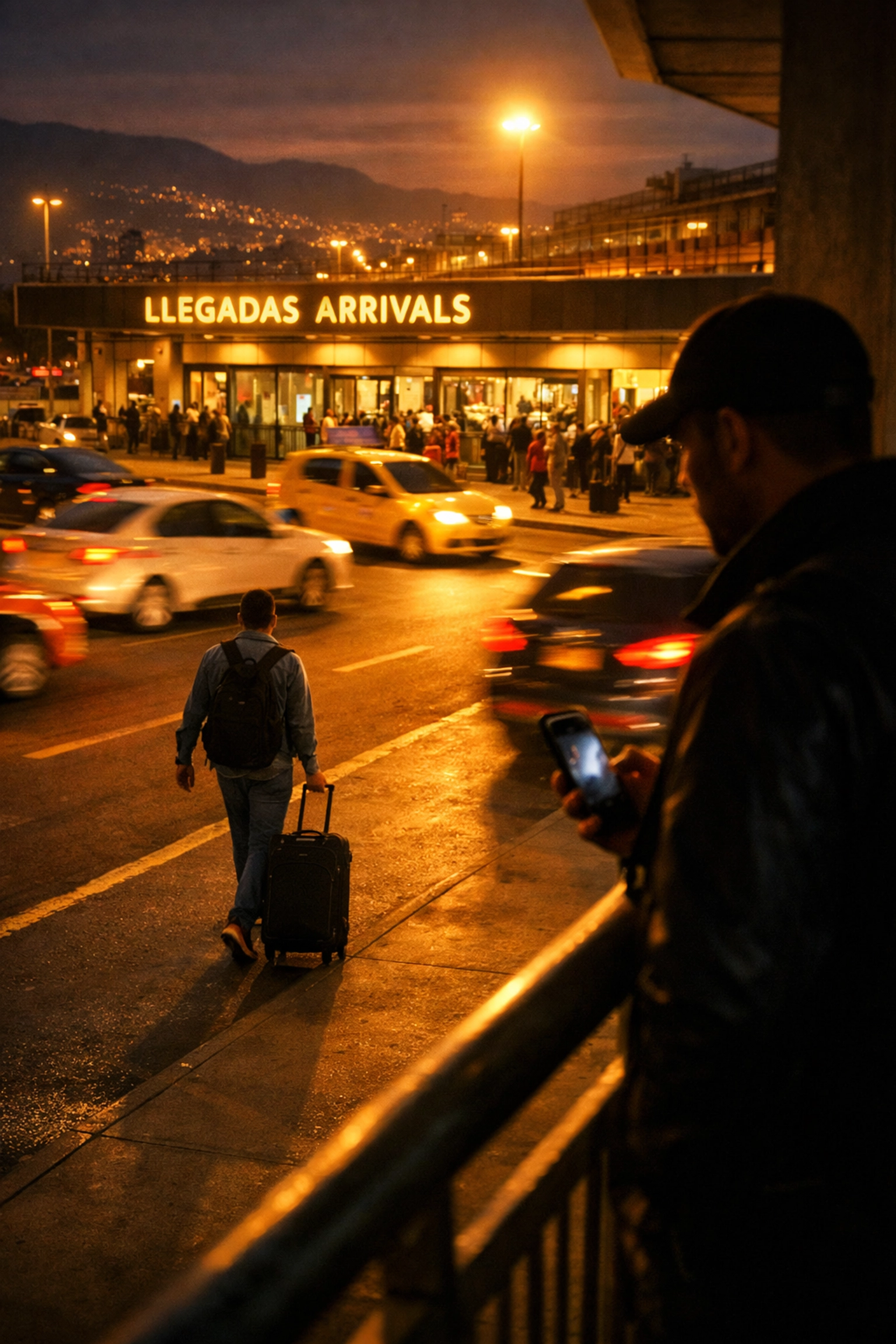
You book a hotel transfer service. The driver knows your flight number, arrival time, and destination. He's legitimate, but he stops for gas and leaves his phone on the dash. Someone photographs the screen. Now a criminal crew knows a foreign traveler with luggage is heading to Hotel X at 8:30 PM.
Scenario 2: The Booking Platform Breach
You reserve through a third-party site. That platform's customer service rep in another country can see your entire itinerary. One compromised employee. One screenshot. Your travel details are for sale in a Telegram group before you even board your flight.
Scenario 3: The Hotel Staff Social Engineer
A caller claims to be your assistant, confirming your "late arrival tonight around 9 PM." The front desk agent, trying to be helpful, says, "Yes, Mr. Johnson's flight lands at 8:45." The caller wasn't your assistant. They were reconnaissance.
These aren't hypothetical. These are patterns 911 Medellin sees weekly.
The Digital OPSEC Checklist Professionals Actually Use
When we coordinate security for executives and high-profile clients, here's the protocol:
1. Never Use Your Real Name for Hotel Reservations
Book under a corporate name, assistant's name, or pseudonym. Confirm with the hotel directly that ID at check-in matches the booking name. This single move eliminates 60% of targeting risk.
2. Don't Request Airport Pickup Through the Hotel
Third-party hotel shuttles are information leaks. Use a trusted security transport provider that operates under operational security protocols. They don't share flight details. They don't log your name in public dispatch systems.
3. Change Your Arrival Time After Booking
Book for 6 PM. Arrive at 10 PM. If someone's working off the reservation data, you just burned their timeline. Notify the hotel of the change via encrypted communication, not email.
4. Use a VPN and Burner Email for Travel Confirmations
Your personal Gmail is tied to your social media, your business, your entire digital footprint. Create a travel-only email account. Use it exclusively for bookings. Never access it from public WiFi without a VPN.
5. Disable Email Forwarding to Personal Accounts
Many people auto-forward confirmations to their main inbox "for convenience." That confirmation just landed in a server your company's IT department doesn't control. One phishing attack later, your itinerary is compromised.
6. Request a Room Number Change at Check-In
Your original booking lists a room type, sometimes even a specific floor. Ask for a different room when you arrive. If someone's planning to access your room: or monitor your movements: they're working from outdated information.
What About Social Media? You're Broadcasting Your Location
Your hotel booking isn't the only leak.
Check your Instagram. Did you post that airport lounge photo with a geotag? That sunset from your hotel balcony? The restaurant reservation confirmation screenshot?
We've seen cases where criminals use social media check-ins to confirm a target's location in real time. You just told the world you're at Restaurante XYZ at 8 PM. Your hotel room is empty. Your valuables are unguarded.
The rule: No location posts until you've left. No flight details. No "just landed" updates. No tagging hotels or restaurants while you're still there.
If you need to share for business reasons, use executive protection protocols that delay posts by 24-48 hours.
Why This Matters More in Medellin Than Other Cities
Medellin has transformed over the past two decades. It's safer, more modern, and genuinely welcoming to visitors.
But organized crime hasn't disappeared: it's evolved.
Express kidnappings still happen. Dating app scams are sophisticated. Theft from tourists is common at hotels, ride-shares, and even high-end establishments. The criminals aren't random street thugs. They're coordinated networks using intelligence gathering, surveillance, and social engineering.
Your digital footprint is their targeting data.
That's why 911 Medellin builds multi-layer security systems that start before you land. We don't just provide bodyguards. We secure your communication channels, sanitize your travel itinerary, coordinate with hotels under OPSEC protocols, and ensure your digital profile isn't broadcasting your vulnerability.
What 911 Medellin Does Differently
We treat your travel information like classified material.
- Secure booking coordination: We interface with hotels using encrypted channels and anonymized protocols
- Transport security: Our drivers don't carry passenger manifests on unsecured devices
- OPSEC training: We brief clients on digital hygiene before they travel
- Counter-surveillance: We monitor for targeting behavior at hotels and transit points
- Emergency response: If your information is compromised, we have protocols to relocate and secure you immediately
This isn't overkill. This is how professionals travel safely in environments where information equals risk.
Your Move
You can't unbook that hotel reservation. You can't recall the confirmation email sitting in three different inboxes.
But you can control what happens next.
Lock down your digital footprint. Change your arrival plans. Use secure transport. Limit social media broadcasts. And if you're a high-value target: executive, entrepreneur, public figure: don't travel without a security team that understands OPSEC.
Ready to travel with real protection?
📞 Call us: +57 324 689 3815
📧 Email: info@911medellin.com
🌐 Website: https://911medellin.com
"I've traveled to Medellin many times for business, but I never felt truly secure until I worked with 911 Medellin. Their team doesn't just provide bodyguards: they think three steps ahead, anticipate risks I wouldn't have considered, and operate with absolute professionalism. I won't travel to Colombia without them."
: Danny Tremblay, Founder & CEO
We've got your back( before you even land.)